
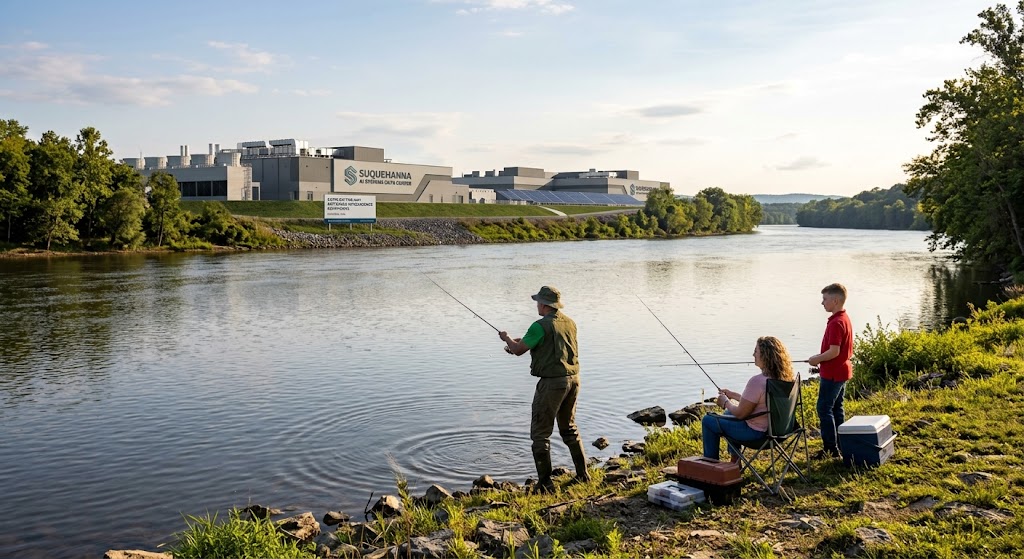
The Susquehanna River starts in upstate New York, runs through Pennsylvania, and empties into the Chesapeake Bay in Maryland. It never once stops to ask which state's laws apply. That simple fact is why interstate river basin commissions exist — and why their work has never mattered more.
What the commissions do
The Susquehanna River Basin Commission (SRBC) and its counterparts were created by interstate compacts — legally binding agreements among states, ratified by Congress. They manage water withdrawals, consumptive use, drought response, and water quality across entire watersheds. When a power plant, a bottling facility, or a municipality wants to use significant volumes of basin water, it answers to the commission.
This is cooperative federalism at its most practical. No single state can manage a river that crosses three borders. The compact model gives states a shared table instead of a courtroom.
Why it matters now
Three pressures are converging on the nation's water resources:
Demand is rising. Data centers, energy production, and growing communities all draw from the same finite supply. Every new large withdrawal is an allocation decision with downstream consequences — literally.
The climate is shifting. More intense storms, longer dry spells, and changing precipitation patterns make the old assumptions unreliable. Drought planning that worked twenty years ago needs a fresh look.
Federal attention is cyclical. Congress moves in fits and starts on water policy — WRDA bills, infrastructure packages, appropriations. Between those moments, the commissions are the steady venue where allocation decisions actually get made.
The advocate's role
Working with a basin commission is different from lobbying a legislature. The proceedings are technical, science-driven, and quasi-regulatory. Credibility comes from understanding hydrology as well as politics — from knowing what a consumptive-use mitigation requirement means in practice, not just on paper.
I've spent years in this space because it rewards exactly what good advocacy should reward: preparation, patience, and respect for the process. The stakeholders who show up informed and constructive get heard. Those who show up to grandstand get tuned out.
The bottom line
Water is the ultimate shared resource, and shared resources demand shared governance. The compact commissions aren't glamorous, but they're where the real decisions about America's water future are being made — one docket, one withdrawal approval, one drought plan at a time.
One thing I left as written: "an allocation decision" should be "an allocation decision."