
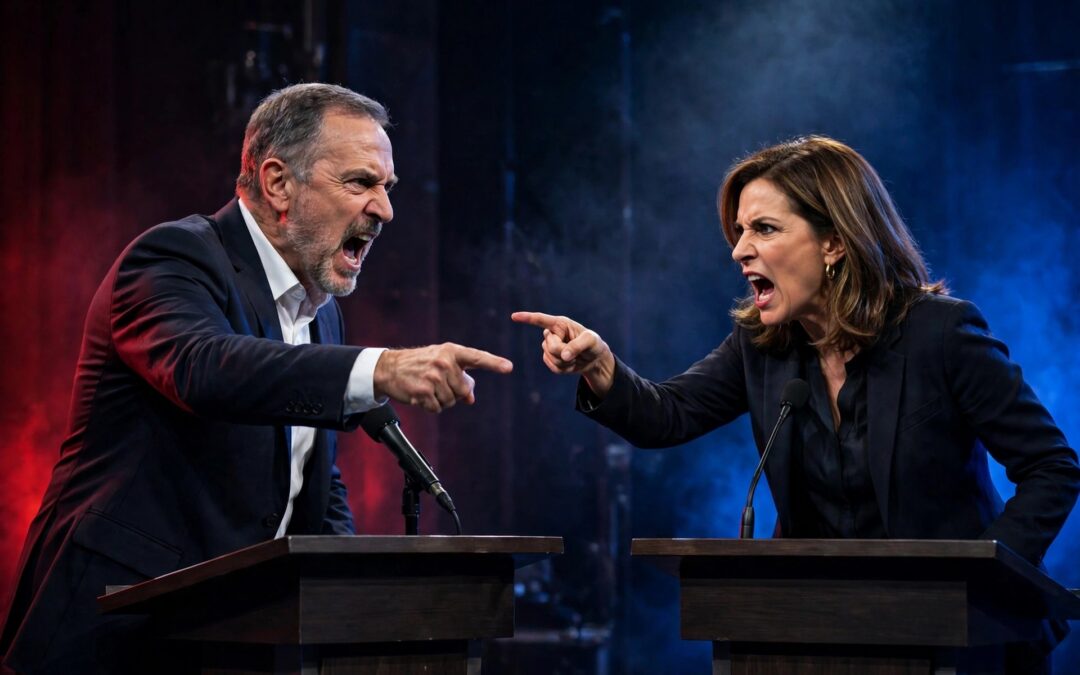
The author of Navigating the Corridors of Power ran four campaigns without throwing a single handful of mud, making the case that running clean in today’s political climate is not naive — it is how you actually earn the right to govern.
Watch any modern campaign and you will witness the same predictable pattern. Commercials rarely focus on what a candidate will do; instead, they focus on what a terrible person the opponent is. Debates devolve into shouting matches, and social media becomes an endless pile-on. Political consultants call this “going negative” because it polls well. Yet, somewhere along the way, we stopped asking the only question that truly matters: What will you actually do for the people you want to represent?
I am not speaking as a spectator. I ran for office four times, learning how to campaign the right way through direct experience. My first race was in college, where I was elected class president. Next, I ran for the independent office of the Home Rule Study Commission, won, and became its chairperson. Then, I ran for School Director, winning on both the Democratic and Republican ballots and finishing first on both tickets. My final campaign — a run for mayor — ended 575 votes short. Four campaigns. Three wins. And not a single personal attack in any of them.
I wrote Navigating the Corridors of Power after a lifetime spent in and around government, and the lesson at the heart of that book is the same lesson those campaigns taught me: government is not about destroying the person across the aisle. It is about getting things done for the people who sent you there. If I were a candidate today, in this current climate, I would run exactly the way I always have.
Run on a Plan, Not Against a Person
Today’s campaigns are built around tearing down the opponent — relying on grainy photographs, ominous voiceovers, and clips taken entirely out of context. I would spend a campaign doing the exact opposite.
Every single day would be dedicated to what I plan to do for the citizens: how I would manage their money, how I would run their government, and what I would fix first. Voters do not need to be told who to hate. They need to be told what you will accomplish in plain language, allowing them to make an informed decision. Winning both parties’ ballots in the same election taught me that voters will cross party lines for a candidate who speaks about their daily lives rather than attacking an opponent.
Respect Voters Enough to Be Specific
A campaign built on insults is usually hiding an empty plan. Turn on the television this fall and count how many ads offer anything substantive — a specific number, a concrete date, or a measurable commitment you could hold the candidate to later.
If I ran today, every speech, advertisement, and interview would answer the same fundamental questions: What is broken? What will I do about it? What will it cost? How will you know I kept my word?
People are far smarter than consultants give them credit for. They can easily distinguish between a candidate with a strategic plan and a candidate driven by a personal grudge.
Remember You Must Govern with These People Tomorrow
Here is a reality that attack artists consistently overlook: the election eventually ends, and the real work begins. The very people you spent six months insulting are the colleagues whose votes you need to pass a budget, fix a road, or fund a school.
Having spent my career in the corridors where that work gets done, I can tell you that nothing lasting is ever built on scorched earth. A candidate who wins through mudslinging arrives in office with no goodwill, no trust, and no viable way to deliver on a single promise.
Even in the race I lost, I could accept the result with grace and dignity because I had run a campaign I never had to apologize for. Run clean, and win or lose, you will be able to look every voter in the eye when the race is over.
If I were on the ballot today, my message would fit on a single line:
I am not running against anyone. I am running for the people — for their streets, their schools, their tax dollars, and their future. Say what you will do, do what you said, and let the mud stay where it belongs: on the ground, not in our politics.